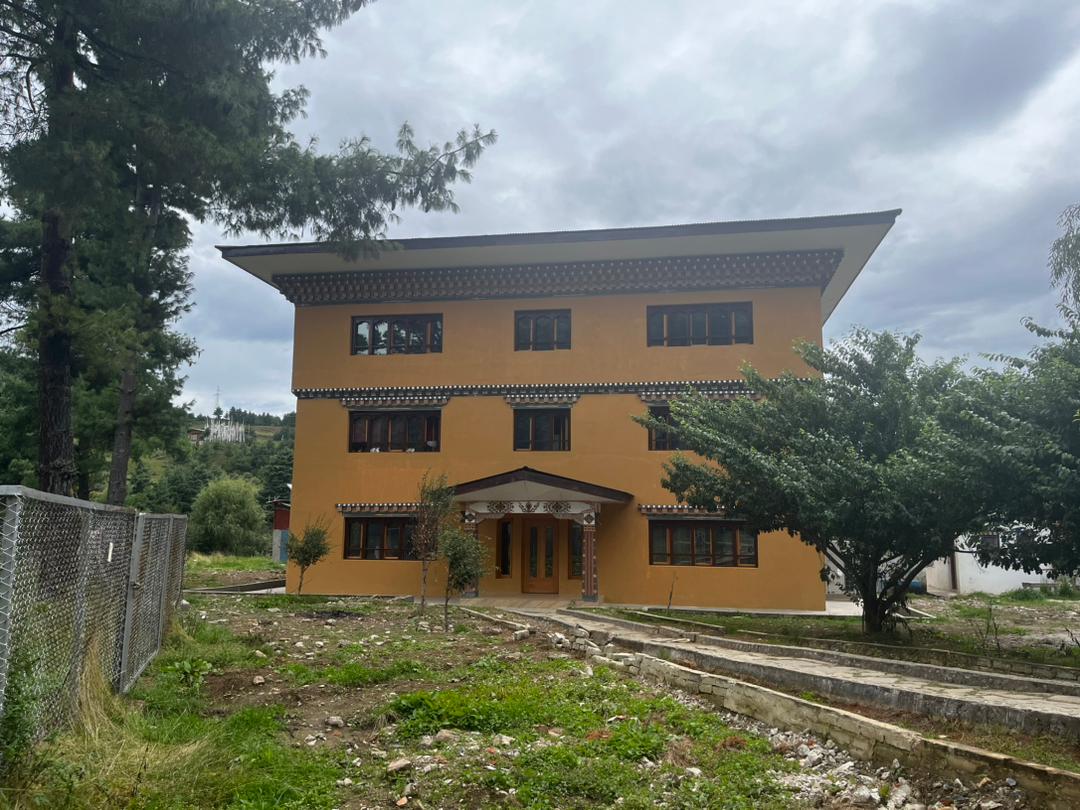

Honorable Dasho Dzongda, Bumthang Dzongkhag and Head of Coordination Office, Austrian Development Cooperation jointly inaugurated the Pilot Energy-Efficient Hostel Building of Technical Training Institute, Chumey Bumthang on 2nd October 2023. The project is funded through Austrian Development Cooperation project “Promotion of Renewable Energy and Energy Efficient Technologies in Building Sector.” This building will benefit upcoming technical trainees and the building will accommodate 72 trainees.
Why Energy-Efficient Building? With modernization, we find ourselves relying on a growing number of electrical and mechanical devices to create a comfortable lifestyle. While this undoubtedly brings convenience, it contributes to a significant increase in energy demand within our country. Unfortunately, our limited energy resources may struggle to keep up with this rising demand, posing a potential threat to our energy security.
To address these challenges and safeguard our energy future, one effective strategy is the adoption of Energy-Efficient Building technologies. These innovative approaches are designed to minimize energy consumption while still providing the necessary indoor comfort we desire. Energy-efficient buildings can reduce energy by 50-80% compared to conventional buildings while maintaining a comfortable temperature.
The implementation of these technologies not only reduces energy consumption and alleviates the strain on our resources, but also saves costs in the long run. To pilot the technologies in the country, the Department of Infrastructure Development retrofitted the three-storied hostel building of the Technical Training Institute, Chumey.
The key objectives of this project are:
- To study energy-efficient technologies in the building sector.
- To reduce the building energy demand and reduce the carbon footprint by saving energy.
- To monitor, measure, and validate the building energy consumption and thermal comfort improvement.
- To provide recommendations on policies to enhance energy conservation and efficiency, and to reduce energy consumption.
The simulated baseline energy consumption of the pre-retrofitted building, without any energy efficiency measures and considering an optimum temperature of 20°C, was 175 kWh/m2 per annum which is a significant amount of energy, and the building is considered very poor in terms of energy efficiency. To reduce the energy consumption of the building, the following energy efficiency measures were incorporated into the building:
- Firstly, the exterior façade and top floor ceiling of the building are insulated with Extruded Polystyrene (XPS) to reduce the heat loss through walls and ceiling.
- Secondly, the windows were replaced with low-e double-glazed windows with sealant to reduce heat loss and air infiltration.
- Thirdly, the room air infiltrations were reduced by sealing gaps and holes.
- Fourthly, old lighting fixtures were replaced by LED lighting.
- Fifthly, water heaters were replaced with solar & heat-pump hybrid water heaters for bathing and laundry purposes.
- Lastly, switching the heating system from a portable heater and panel radiator to a Variable Refrigerant Volume (VRV) heating system with a higher coefficient of performance.
With the incorporation of energy efficiency measures, energy consumption of building is expected to reduce to 40kWh/m2 per annum.
Now, the next step is to perform measurement and verification of the building to validate the effectiveness of energy efficiency measures. For this, the Department has placed energy monitoring equipment and temperature sensors in the hostel. The Department will collect the data for a yearlong to measure and determine the energy consumption pattern and indoor thermal environment quality. Following the verification, the Department will come with Building Energy Efficiency Code of Practice which will later incorporated in the Building Code of Bhutan.